A city too loud to listen
When I moved to Canberra, the plan was simple: get back on HF from home. It didn’t survive contact with reality. My home QTH — the Q-code for one’s location — turned out to be hopelessly noisy on the high-frequency bands. Suburban Canberra is wall-to-wall solar panels, and cheap ones scream across the spectrum.
From home, HF wasn’t just difficult. It was unviable — and where it was barely viable, it was joyless. If I wanted to hear the world, I’d have to listen from somewhere else.
Split the station in two
The answer was to separate the control of the station from the station itself: keep the operating position at home, and put the antennas and the radio somewhere quiet, driving the whole thing over the network.
This wasn’t a new idea to me. In my Navy days, the transmitters lived at Belconnen Naval Transmitting Station and the receivers at Bonshaw, while the operating was done from HMAS Harman — NAVCOMMSTA Canberra. Central control; each site built to do exactly one job, in exactly the right place for it. I always liked that arrangement. IKARA is the same thought, shrunk to one operator.
Buying a radio I thought was weird
I was a knobs-and-dials man — Icom, Kenwood, Yaesu. I’d known about Flex Radio since the mid-2000s and, honestly, thought they were strange. They didn’t look like radio to me, and the waterfall display was alien.
For me, ham radio has to be a physical experience — not just a mouse and keyboard driving a screen.
But remote operation is precisely what Flex does well. So I took the leap: a Maestro console for the desk, and a Flex 8400 for the far end. If I wanted the station to live somewhere else, this was the way in.
It actually worked
The first test never left my own address. The shack and the Maestro sat in one spot; the radio, a Starlink dish and a Raspberry Pi sat in another. In the cloud, an AWS Lightsail machine acted as an exit node — making the Flex appear as though it lived on a public address in a data centre, so I could reach it cleanly from anywhere over SmartLink.
I was amazed. The latency was low. It was viable even for Morse, where timing is everything. The concept held. Now it just needed a real home — somewhere genuinely quiet.
A station you can tow
The plan was always portability. Picture a comms trailer: tow it to a quiet paddock, pay a farmer a few dollars to let it sit in an unproductive corner, deploy the solar and the antennas, and run the lot remotely. When the paddock’s needed again, hook up, tow it away, and redeploy somewhere new.
A radio station with no fixed address.
That’s the shape IKARA is growing into — a site that can move when it has to, and comes on air again wherever it lands.
Spring Range
The search for a new home led north. Mark Bosma, VK2KI, knew a landowner at Spring Range, just north of Canberra: roughly fifty acres, and beautifully quiet for radio. He’s kindly offered it as the IKARA site.
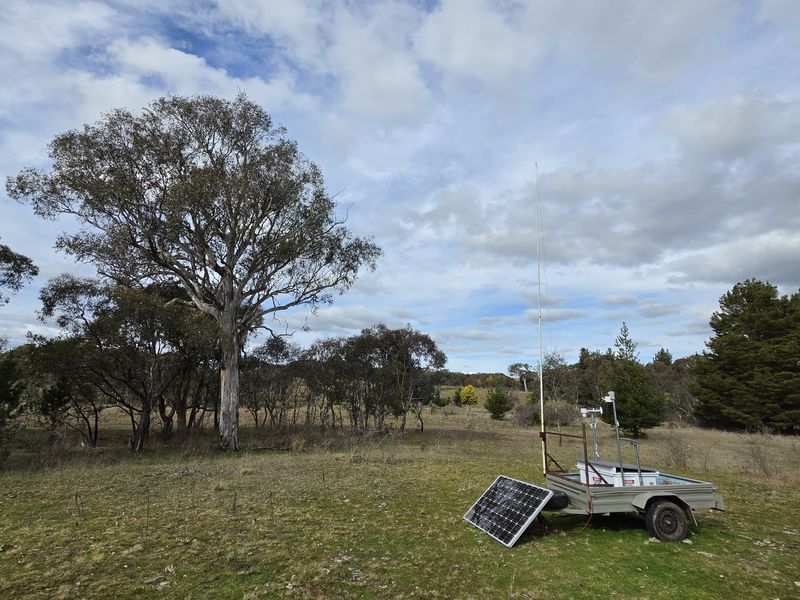
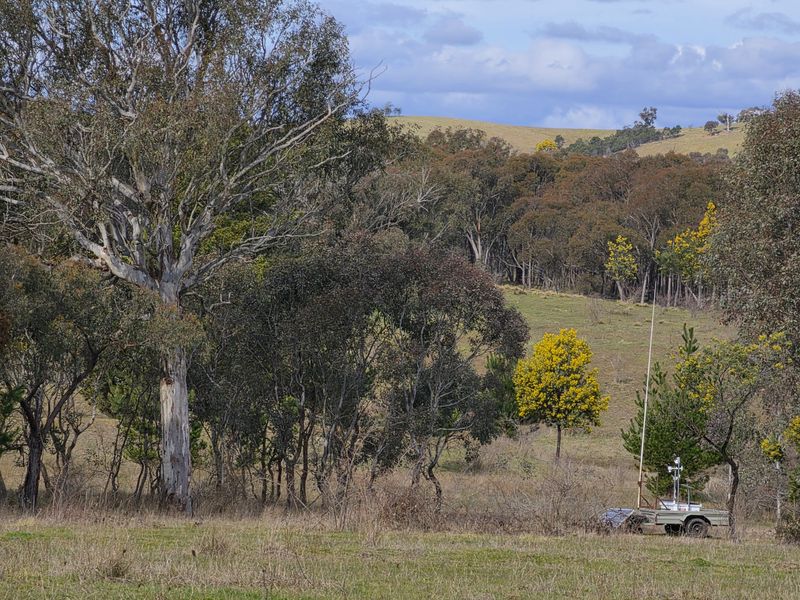
That’s where IKARA resides now. The paddock is real; the station is live.
Where “IKARA” comes from
IKARA comes from the Ikara missile system I first saw aboard the destroyer escorts of my Navy days — ships like HMAS Derwent. The missile lived in a magazine below decks; on the order to fire, it rose through a hatch onto a trainable rail launcher, lit its motor, and flew out to drop a homing torpedo by parachute miles downrange, closing on a submarine long before the ship could. You can watch one in action here.
I loved the engineering of it — the choreography of the hatch, the rail, the launch, a torpedo delivered by air. I still do. And the name’s just cool.
Build it like you can’t come back
IKARA is being built to sit alone. Once it’s deployed in a paddock an hour or more from home, I can’t wander out to reboot it every time something hangs. That single fact changes how you build: it has to be right the first time.
I take my cue from mission-critical engineering — the discipline of systems that get exactly one shot. The thinking has to be done up front, the failure modes anticipated, the thing built to survive on its own without a hand on it.
You don’t push a code update to a satellite once it’s in orbit.
That’s the bar I hold IKARA to: engineer it as though I’ll never touch it again — because for long stretches, I won’t.
Weather Station Kurt
There’s one piece of history I keep coming back to: Weather Station Kurt. In 1943 a German U-boat crew landed on a remote shore in northern Labrador and set up an automatic weather station — a cluster of canisters, an antenna mast, its own batteries — then left it to run alone, reporting telemetry home over HF every few hours. It was designed to keep working, untended, for months.
The history books remember it as the only known armed German landing in North America during the whole war. What captures me is the concept: an unmanned station, self-powered, dropped into the middle of nowhere, quietly talking home over the airwaves, built to look after itself.
Swap a hostile Arctic coast for a quiet Spring Range paddock and you have IKARA’s DNA exactly — deploy it, power it, let it report to me over radio, and let it get on with the job alone. Kurt has been in the back of my mind for years. Elements of it are in everything I’m building here: the telemetry, the autonomy, the deploy-and-leave.
How it went together
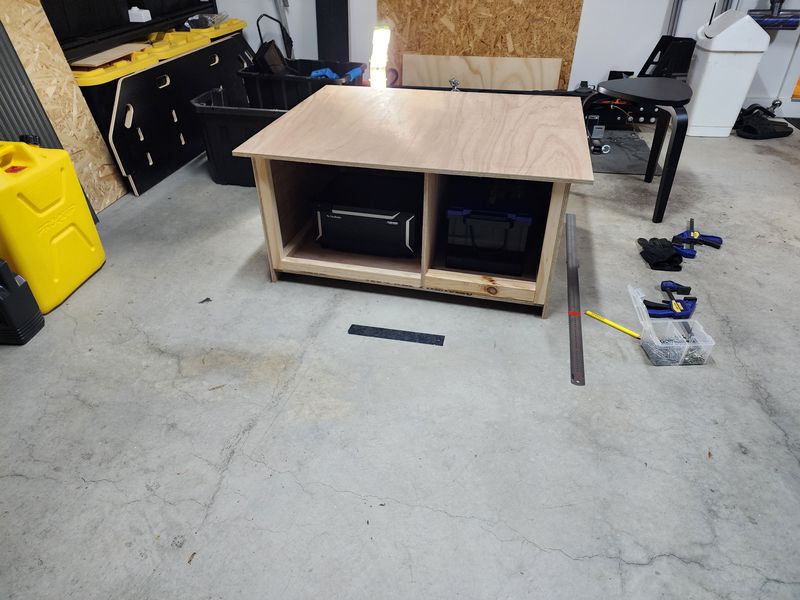
- Gloss white outside. High-gloss white, to reflect away as much solar energy — and therefore heat — as possible.
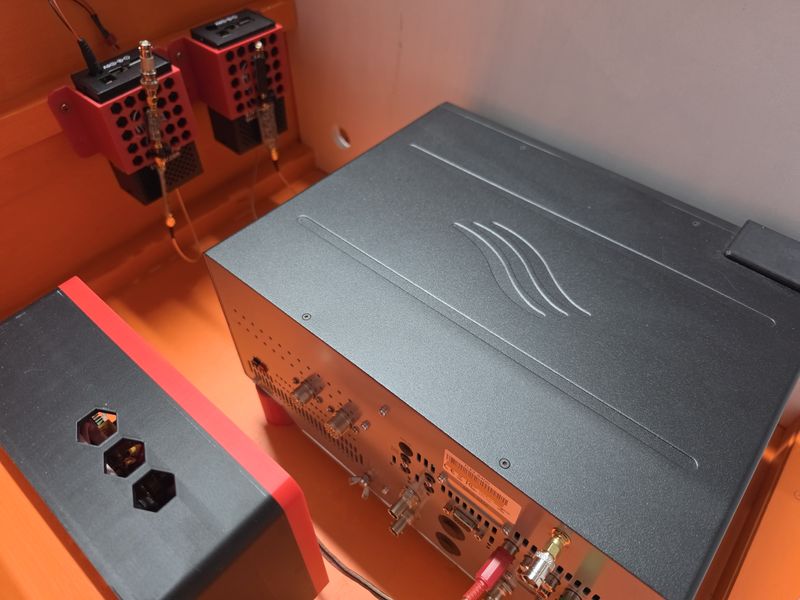
- It breathes slowly. Air enters low on the left-hand side and leaves high on the right, with a thermo fan on the section in between.
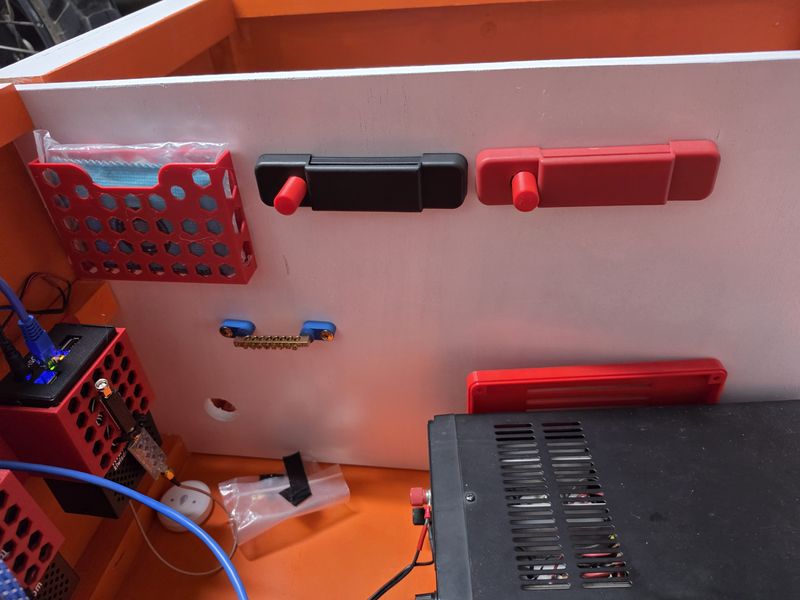
- KTM orange inside. There is no engineering reason for this. I like KTM motorbikes.
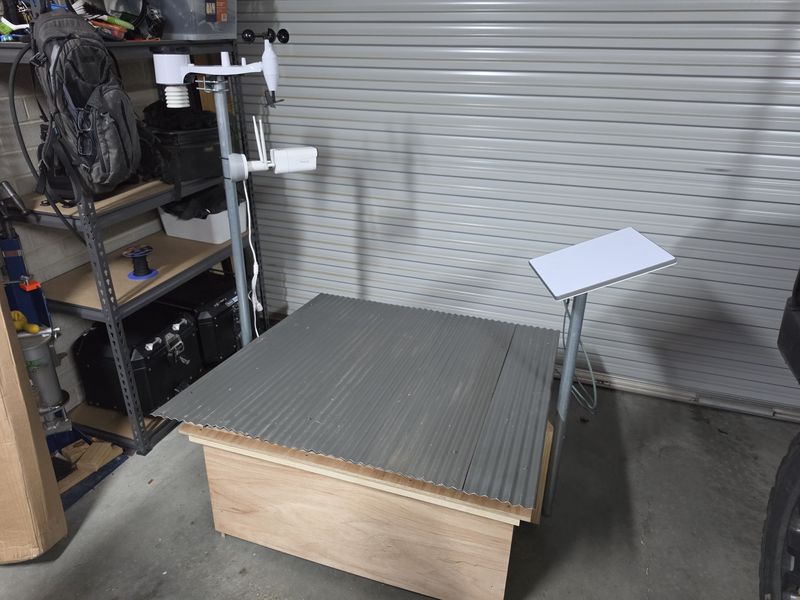
- The solar is a work in progress. Three secondhand 250 W panels, which do the job and cost almost nothing. They are noisier than I would like — more QRM into the receiver than I want — and quietening them down is still on the list. In practice it is not an issue: the QRM eliminator deals with it quite well.
- The trailer was not the plan. Originally the cabinet was to sit on the ground on a small standoff — a bed of bricks or something like it. Then this trailer was given to me for free. It keeps the cabinet off the ground, and it gives solid mounting points for antennas and strain relief for cabling, should wildlife trip over any of it.
- The paddock is empty. No stock — aside from some kangaroos passing through occasionally.
- It will always be a work in progress. Largely finished, but never finished.
The build so far — see all 71 photographs